PRACHUAP KHIRI KHAN: April 1, 2026: Businesses and livelihoods across the greater TriCove area are beginning to feel the impact of rising global oil prices, as a sharp surge in energy and fuel costs linked to escalating conflict involving Iran ripples through Thailand’s economy.
On the ground, small operators say they can no longer absorb the pressure. A long-time noodle vendor in Prachuap recently raised prices from 35 to 40 baht per bowl after holding steady for seven to eight years, citing not only higher fuel prices but also increases in cooking gas, cooking oil, packaging, and raw ingredients.
One local example, highlighted in a youtube Channel 7 television report, points to a broader cost squeeze now hitting consumers at street level in Prachuap
“I’ve tried to hold prices for a long time, but it’s not just fuel — cooking gas, oil, packaging, and raw ingredients have all gone up. I can’t absorb the costs anymore,” the vendor said.
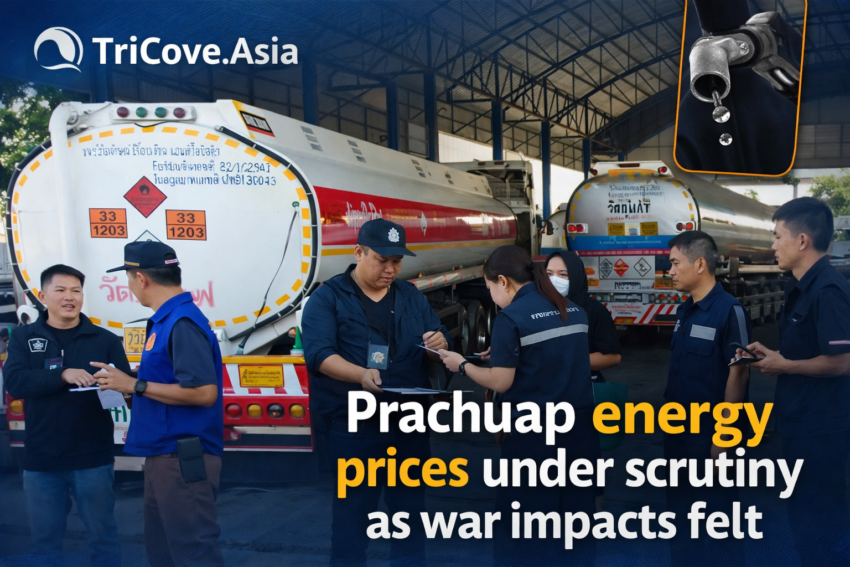
Provincial officials, meanwhile, say they are moving to minimize the fallout and prevent opportunistic pricing. The Prachuap Khiri Khan Provincial Commerce Office, according to an update on their website, inspected fuel storage and retail sites in Pran Buri last week and found no signs of hoarding, supply refusal, or unjustified price hikes, while warning operators not to exploit the situation.
A separate inspection led by the Provincial Energy Office and partner agencies on March 28 also found no irregularities, according to the Prachuap public relations office Facebook page.
Officials said seven fuel operators and 12 storage depots across the province were checked, covering a combined stock of about 249,000 litres of fuel and 7,000 litres of LPG, with no evidence of hoarding or sales refusal.
The local monitoring comes as Thailand faces a broader fuel shock. Diesel rose above 40 baht per litre on March 31 after the latest adjustment by the Oil Fuel Fund Management Committee, with petrol and gasohol prices also moving higher, reflecting mounting pressure from global crude markets.
The latest price jump has been linked to market turmoil tied to the Iran conflict, which has raised fears of prolonged disruption to Middle East energy flows. Across Thailand, sectors heavily dependent on transport and diesel are already warning of knock-on effects, including fishing fleets, logistics operators, farmers, and small vendors.
For Prachuap Khiri Khan, the concern is especially acute because so much of the province’s economy depends on road transport, fisheries, informal food trade, and small-scale local distribution. Even if authorities succeed in preventing hoarding and unfair fuel pricing, the wider economic pain is already showing up in the cost of everyday goods, suggesting more local businesses may soon be forced to follow suit.
Prachuap residents and businesses are standing by to see if the government will step in to alleviate rising fuel costs by offering subsidized energy bills, as has been a welcome measure in the past.

Author: TriCove.Asia
TriCove.Asia Administrator.